
Fractional CFO support for owner-managed businesses
Most owner-managed businesses reach a point where the finance function reports accurate history and nobody is answering the harder questions. What cash looks like in nine months under three different scenarios. Whether the next site can be funded from operating cash. What a lender or an investor will make of the numbers before they ever see them.
Those are CFO questions, and they rarely justify a full-time CFO salary. Fractional CFO support puts that seniority into the business at the level it actually needs.
When a business needs a CFO but not a full-time one
The gap usually opens quietly. A capable bookkeeper or financial controller keeps the ledger clean and the statutory accounts filed. The management accounts arrive, late and largely unexplained. The forecast is a spreadsheet the managing director maintains personally at weekends. Nothing is wrong, and nothing is being decided on good information.
The signals we see most often:
You are preparing to raise capital or refinance, and the numbers are about to be examined by someone whose job is to find the holes in them.
You are eighteen months to three years from a sale, and diligence will test reporting that has never been tested.
Board or investor reporting takes days to assemble and still prompts more questions than it answers.
You are evaluating an acquisition with no reliable way to model what it does to group cash.
The managing director has become the de facto finance director, and it is consuming time the business needs them to spend elsewhere.
What a fractional CFO does that a financial controller does not
The distinction is direction of travel. A financial controller is accountable for the accuracy of what has already happened. A CFO is accountable for the quality of the decisions about what happens next.
Builds and owns the forecast, including a downside case that has been stress-tested rather than assumed away.
Sits opposite lenders, investors and acquirers, and answers for the numbers under questioning.
Translates the trading position into board-level decisions on pricing, capital allocation, headcount and capital structure.
Provides challenge. A good CFO is the person willing to say the payback does not work.
Builds the reporting framework, then holds the business to it.
Neither role substitutes for the other. Fractional support is almost always added above an existing finance function rather than instead of it.
How we structure a fractional engagement
Founder-led, bench-delivered. Sam Miller or Stephen Murray scopes the engagement, establishes what the business actually needs rather than what it first asks for, and remains accountable for it throughout. Week-to-week delivery is by a vetted fractional CFO matched to your sector and situation.
We are direct about this because the alternative, implying that a founder will personally occupy every seat, would not be true and you would discover it soon enough. What does not change is who answers to you if the engagement is not working.
How it works in practice
Regular, ongoing involvement scaled to what the business needs, rather than a fixed retainer bought whether or not it is used. In most engagements that settles into a predictable rhythm: a monthly cycle around the management accounts and the board pack, with additional intensity around a funding round, a budget or a transaction.
We integrate with the finance team you already have. The bookkeeper keeps bookkeeping, the controller keeps control, and the fractional CFO occupies the seat above them that has been sitting empty.
Where fractional support meets a transaction
Most of our fractional work sits alongside something else. A business preparing for exit needs someone to build the reporting that will survive diligence, and to stay and defend it. A business raising capital needs someone who can model the plan and then sit in the room while it is questioned. A platform pursuing acquisitions needs consolidated numbers before the second deal, not after it.
That is the practical argument for taking fractional support from a corporate finance firm rather than a finance-resourcing agency. The person in the seat has already seen the transaction you are heading towards.
In practice: a fast-growing services business
A current engagement is with a fast-growing services business with recurring revenue, where we placed a fractional CFO in July 2026 alongside the departure of the existing finance manager.
The brief has four strands:
Bring the finance function in-house.
Define and produce the management accounts, with KPIs and written commentary, so that reporting supports commercial decision-making rather than simply recording what has already happened.
Take responsibility for delivery of a new finance system, which was running behind schedule.
Build the internal finance team, so the business has accurate reporting and a finance function capable of commercial partnering rather than processing alone.
None of those four is a bookkeeping task, and none of them on its own would justify a full-time CFO. Together, for a period, they do. That is what a fractional engagement usually looks like in practice.
Common questions
What is the difference between a fractional CFO and an interim FD?
An interim usually covers a gap full-time for a fixed period. Fractional is ongoing at partial capacity, a permanent seat occupied part of the time, which suits a business that needs the seniority continuously but not daily.
Will a fractional CFO replace our existing finance team?
No. The role is added above your existing function, not in place of it. Your bookkeeper and controller keep their responsibilities.
What size of business does this suit?
Typically UK owner-managed businesses with EBITDA between £500k and £5m and between five and 150 employees. We work UK-wide, with most of our deal flow originating in the Midlands.
How quickly can someone start?
Usually within a few weeks. The constraint is matching the right person to the sector and situation rather than availability in the abstract.
Can a fractional arrangement convert to a full-time appointment?
Frequently, and it is a sensible route into one. It lets both sides establish whether the fit works before anyone commits to a permanent hire.
Do we have to commit for a long period?
Engagements are scoped to a defined need and reviewed regularly. If the business outgrows the arrangement, that is a good outcome rather than a lost account.
Related services
Financial Readiness & Modelling - for the forecasting and reporting a fractional CFO will build and own
Fundraising & Refinancing - where the engagement is driven by a capital raise
Exit Planning - where the objective is reporting that survives diligence.
Ready to strengthen your financial leadership or discuss how a Fractional CFO can support your business goals?
Contact Sam Miller or Stephen Murray directly for an initial confidential discussion.

Sam Miller
Co-Foundersam.miller@baysideadvisory.co.uk
07940 829 846
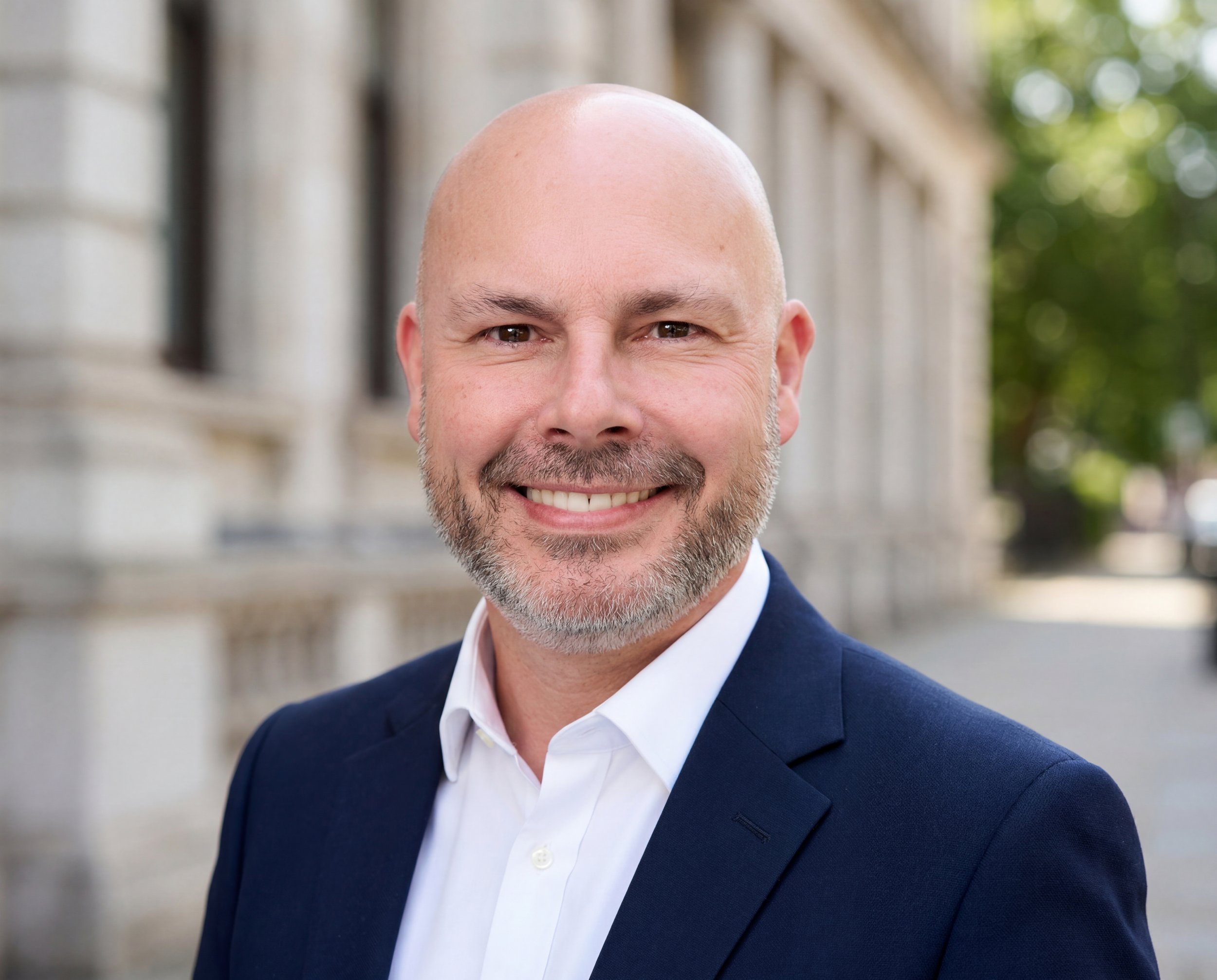
Co-FounderStephen Murray
stephen.murray@baysideadvisory.co.uk
07577 611 974